The Power of Facial Cupping: A Holistic Approach to Firm, Radiant Skin
Introduction
After more than six years working in a spa setting, one of the most consistent requests I’ve received from clients is simple: How do I achieve firmer, more toned, and plump skin and maintain those results over time?
Many expect a complex answer or an advanced treatment plan. Instead, my recommendation has often been surprisingly simple. So simple, in fact, that it initially leaves people skeptical until they experience it for themselves.
One of my most trusted and effective recommendations is facial cupping.
For those seeking a natural alternative to more invasive procedures, facial cupping offers a holistic approach that supports both the skin and the body. It works with your physiology, not against it, encouraging your body to embrace its natural ability to heal.
I’ll admit, when I was first introduced to facial cupping, I didn’t fully understand its potential. But after taking the time to study and practice I intentionally incorporating it into my treatments, I began to see consistent, visible results. Not only in my clients, but in my own skin as well. Over time, it has become a staple in my personal wellness routine.
I’ve personally noticed reduced puffiness, improved facial tone, and a significant release of tension; benefits that many of my clients now experience as well. What makes this practice especially powerful is its simplicity: it requires minimal time, yet delivers meaningful results by encouraging circulation and delivering nutrients to the areas that need it most.
Whether used as an enhancement to a professional facial or incorporated into a home care routine, facial cupping is a practice that supports long-term skin health in a deeply restorative way.
What Is Facial Cupping?
Facial cupping is an ancient skincare practice rooted in Traditional Chinese Medicine (TCM), designed to naturally rejuvenate and tone the skin.
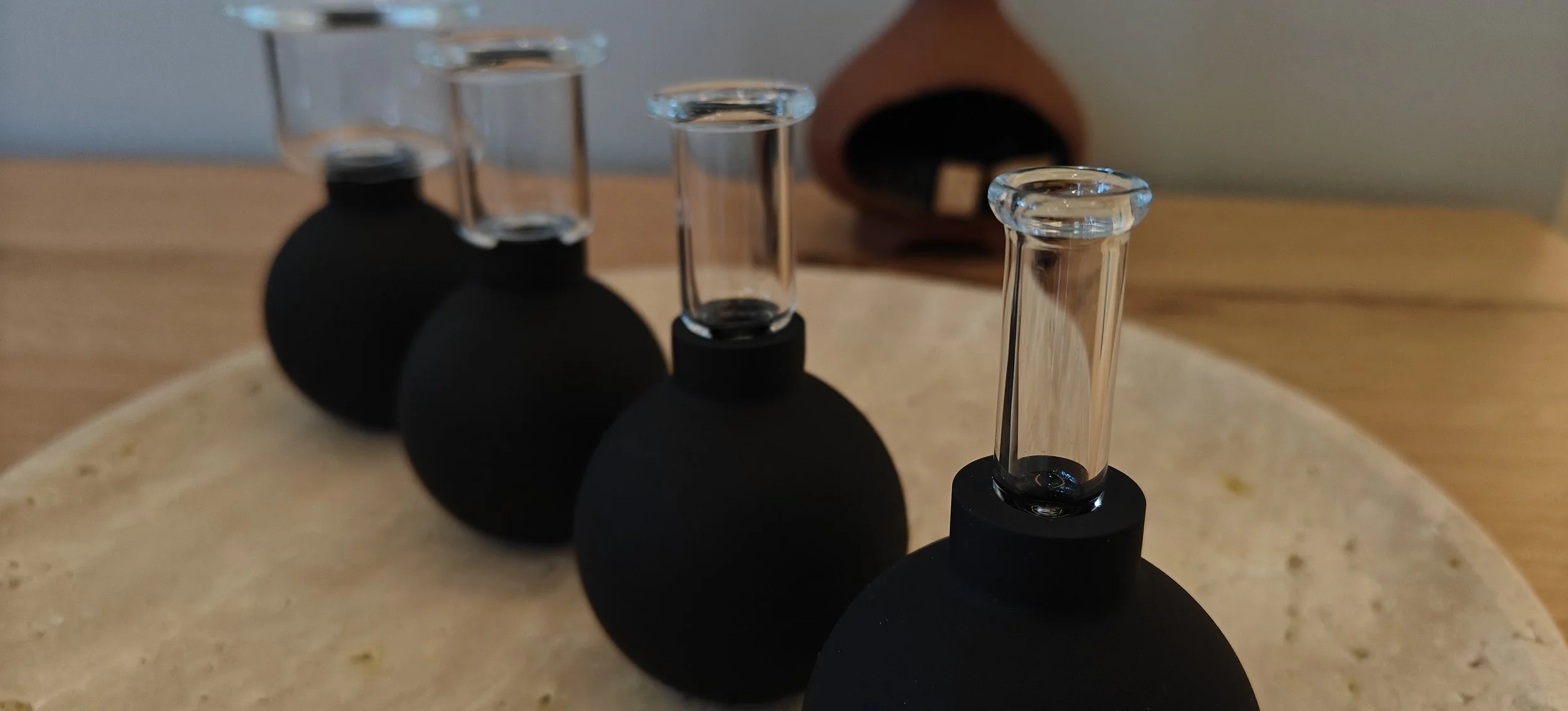
The technique uses small silicone or glass cups that create gentle suction on the surface of the skin. These cups are carefully glided across the face, stimulating circulation and encouraging the flow of oxygen-rich blood to the skin and underlying muscles.
From a holistic perspective, facial cupping also works to stimulate qi—the body’s vital life force energy—supporting not only the health of the skin but overall well-being.
It’s important to distinguish facial cupping from body cupping, as they serve different purposes and are performed differently.
Body cupping often uses heated glass cups to create a stronger vacuum effect. The cups are placed in a stationary position and may leave temporary marks on the skin. This method is typically used to address deep muscle tension, improve circulation, and support detoxification.
Facial cupping, on the other hand, is much more gentle and intentional. The cups are smaller, the suction is lighter, and the movement is continuous. This ensures that the skin is stimulated without causing trauma, making it suitable for the delicate structures of the face.
Through this gentle stimulation, facial cupping helps to:
Increase circulation to the skin
Release tension in facial muscles
Support lymphatic drainage
Encourage the removal of stagnant fluids and toxins
The Benefits of Facial Cupping
One of the reasons my clients consistently request facial cupping is because of the immediate, visible results. Skin often appears brighter, more lifted, and refreshed after just one session. However, like most holistic practices, the true benefits are seen with consistency over time.
When practiced regularly, facial cupping can:
Increase oxygen-rich blood circulation to the skin and tissues
Support lymphatic drainage and assist in detoxification
Improve hydration and promote a naturally plump appearance
Stimulate collagen production over time
Release tension held in the facial muscles
Reduce puffiness and fluid retention
Soften the appearance of fine lines and wrinkles
Enhance tone in the jawline, neck, chin, and décolleté
Support relaxation by calming the nervous system
In my experience, many clients don’t realize how much tension they hold in their face until it’s released. Once that tension softens, the skin appears more lifted and balanced, without the need for aggressive treatments.
When to Avoid Facial Cupping
While facial cupping is a safe and effective practice for many, it is not suitable for everyone. As with any treatment, it’s important to approach it with awareness and care.
You should avoid facial cupping if you:
Have a bleeding or blood clotting disorder
Are undergoing active cancer treatment or chemotherapy
Take blood-thinning medications
Have an active infection or virus
Have open wounds, lesions, or broken skin
Have tumors
Have extremely fragile or thin skin
Are experiencing inflamed acne or rosacea
If you are unsure, it is always best to consult with a qualified healthcare provider before incorporating facial cupping into your routine.
Professional Recommendation
For clients seeking firmer, more toned, and radiant skin, I often recommend pairing facial cupping with an enzyme facial.
Enzyme facials work to gently exfoliate, brighten, and tighten the skin by removing dead skin cells and supporting cellular renewal. When combined with facial cupping, the results are amplified—circulation is enhanced, product absorption improves, and the skin is left looking noticeably more revitalized.
This combination creates a synergistic effect that supports both immediate results and long-term skin health.
Final Thoughts
In a world where quick fixes and invasive treatments are often prioritized, facial cupping offers a refreshing alternative—one that is rooted in tradition, supported by physiology, and aligned with the body’s natural rhythms.
From my experience as a practitioner, the most impactful results don’t come from doing more—they come from doing what is intentional, consistent, and supportive.
Facial cupping is one of those practices.